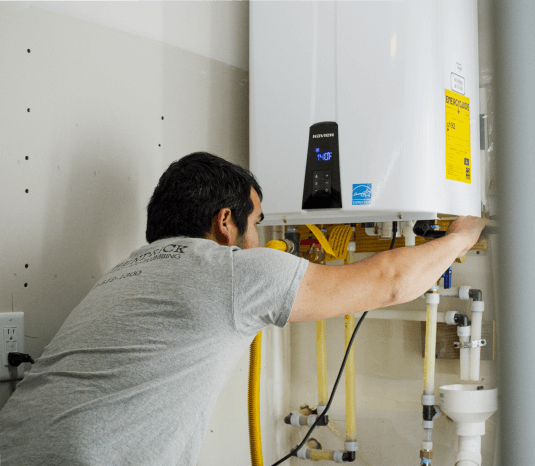
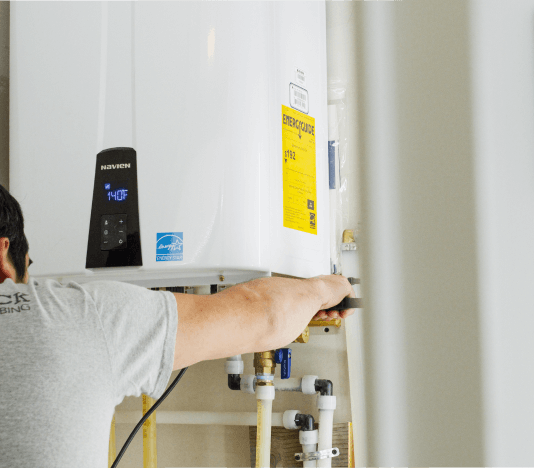
When your water heater fails, your day to day routine is thrown off. At Hendrick Heat, Air & Plumbing, we recognize the crucial role your water heater plays in your normal activities. We provide expert water heater repairservices designed to bring back the comfort and convenience of consistent hot water. Let our Hendrick Team repair your water heater issues and reinstate the steady flow of warm water to your home.
Understanding Water Heater Issues
If you're experiencing any of the following issues with your water heater, it may be time to call in the Hendrick Team.
1. Inconsistent Water Temperatures
Fluctuations in your water temperature can indicate a failing heating element or a faulty thermostat.
2. Strange Noises
Popping, rumbling or whining sounds from your water heater can be a sign of sediment buildup or an imminent component failure.
3. Leaks Around the Unit
Any moisture or pooling water around your water heater is a red flag that requires immediate attention.
4. Rusty Water
Discolored or rusty water could suggest tank corrosion or issues with the anode rod.
By addressing these issues early, you can save yourself from having to replace the system until much later.
Types of Water Heaters Hendrick
Technicians Repair
Our team is trained to handle various models including:
Traditional Tank Water Heaters
The most common type found in homes, available in electric and gas variants.
Tankless Water Heaters
These provide on-demand hot water and are known for their energy efficiency.
Hybrid Models
A combination of conventional tank heaters and heat pump technology for enhanced efficiency.
High water pressure can strain pipes. Have your pressure tested and regulated if necessary.
2. Corrosion
Water heater tanks can corrode, especially if the anode rod, which protects the tank from rusting, is not functioning properly.
3. Heating Element Failures
The elements that heat the water can burn out, leading to a lack of hot water.
4. Thermostat Problems
A malfunctioning thermostat can prevent the water heater from maintaining the desired temperature.
By understanding these common issues, Hendrick Technicians can quickly diagnose and address any water heater problems you may encounter.
Should I Repair or Replace My
Water Heater?
Deciding to repair or replace your hot water heater can be challenging. We are committed to providing honest, professional advice based on the severity of the issue, the age of your unit, and your budget considerations.
Repair
Ideal for newer units with minor issues.
Replacement
Recommended if the water heater is nearing the end of its lifespan or repairs are too costly in the long run.
Preventative Maintenance and
Tips
To avoid unexpected breakdowns and extend the life of your water heater, getting routine service is very helpful. Our preventative maintenance includes:
Inspection and Cleaning
We’ll inspect your water heater for signs of wear and tear, clean out sediment build-up, and ensure all components are functioning correctly.
Anode Rod Replacement
Our technicians will check the anode rod, which is crucial for preventing tank corrosion, and replace it if necessary.
Temperature and Pressure Relief Valve Check
We’ll test this safety feature to ensure it’s in good working order.
Inconsistent water temperature, rumbling or popping noises, rusty water, and moisture around the tank are all signs it’s time to call a plumber before the problem gets worse.
Most tank water heater repairs range from $150 to $850, depending on the part involved, though issues like a gas control valve or heat exchanger can push the cost higher.
Tankless repairs typically run a bit higher, from $150 to $1,300, since components like the heat exchanger and circuit board are more specialized than standard tank parts.
We don’t recommend it. Water heaters involve gas lines, electrical connections, and pressurized components, so a DIY repair can be a safety risk and may void your warranty.
If your unit is newer and the issue is minor, repair usually makes sense, but if it’s approaching the typical 8 to 12 year lifespan or repairs are piling up, replacement is often the smarter long term choice.
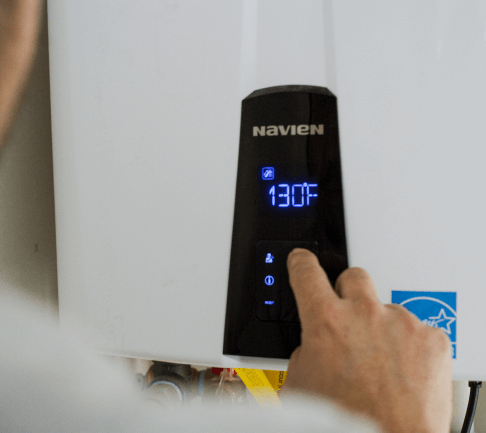
Most manufacturers and plumbers recommend 120 degrees Fahrenheit, which balances safe, comfortable hot water with lower energy bills and a reduced risk of scalding.