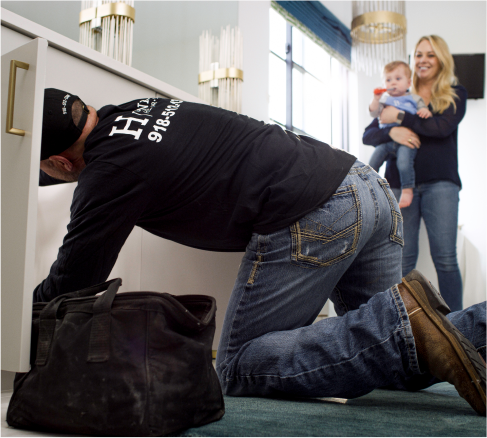
A slab leak is more than just an inconvenience. It’s a plumbing problem that undermines the foundation of your home. It can lead to glaring water waste, an increase in your utility bills and many other issues. That’s where we can help. The Hendrick Team is ready to deliver effective solutions, safeguard your home and eliminate the slab leak for good.
What Causes a Slab Leak?
Simply put, a slab leak is a break or leak in the water lines that run beneath the concrete foundation of your home. These leaks can occur in either the incoming water lines or in the sewer lines embedded within or below the concrete slab. Here are some common causes:
1. Corrosion
Corrosion occurs when pipes chemically react with water or their environment, eventually creating holes. High acidity or specific minerals can accelerate this deterioration.
2. Abrasion
Pipes may rub against concrete or gravel when water flows through them, gradually wearing them down.
3. Pressure
Geological changes, such as earthquakes or soil erosion, can exert pressure on the pipes, leading to leaks.
4. Poor Construction
Initial plumbing issues or substandard materials can also be a culprit.
5. Tracer Gas Injection
This technique uses a non-toxic, inert gas to detect any escaping air in your systems.
By understanding the causes, you can begin to seek solutions that will protect the foundation of your home.
Signs You Might Have a Slab Leak
Recognizing the early signs of a slab leak can save you from extensive damage and expensive repairs. Here's what to look for:
Inspect the faucet or showerhead for visible signs of wear or damage.
Disassemble the fixture to identify the faulty component.
Replace any worn parts with high-quality replacements
Reassemble and test the fixture to ensure the leak is resolved
A visible shift in the foundation
Our Approach to Slab Leak Detection
Once the leak is detected, our team assesses the extent of the damage. We consider factors such as the size of the leak, the duration it has been active and the overall condition of the plumbing
Unexplained spikes in your water bill
The sound of running water when all water is turned off
Moisture or mildew under carpets or flooring
A visible shift in the foundation
Comprehensive Slab Leak
Repair Solutions
We understand that each slab leak presents a unique challenge. That's why we offer a spectrum of repair options to fit the specific needs of your situation.
Spot Repairs
For newer plumbing systems with a singular leak, a direct repair of the specific area can be the most cost-effective solution.
Repipe or Reroute
If the leak is symptomatic of a larger problem, we may recommend replacing or rerouting entire sections of piping.
Preventing Future Slab Leaks
Prevention is always better than a cure, and this is particularly true when it comes to slab leaks. Our Hendrick Technicians offer valuable advice to help you protect your home from future leaks:
1. Regular Inspections
Have a Hendrick Technician inspect your home if you think you have a slab leak.
2. Water Pressure Checks
High water pressure can strain pipes. Have your pressure tested and regulated if necessary.
3. Water Quality Treatments
Poor water quality can accelerate pipe corrosion. Consider installing a water softener if you have hard water.
4. Observation
Keep an eye out for signs of leaks, such as unexpected increases in your water bill, dampness or the sound of running water when all taps are off.
By addressing leaks early, you not only save on potential costs but also contribute to the overall well-being of your household.
A slab leak is a break or leak in the water or sewer lines running beneath your home’s concrete foundation. Left untreated, it can waste water, spike your utility bills, and even shift your foundation.
Slab leaks are commonly caused by pipe corrosion, abrasion against concrete or gravel, ground pressure from soil shifts, or poor construction. Older or lower quality pipes are especially at risk.
Look for unexplained spikes in your water bill, the sound of running water when everything is off, damp or moldy carpet, and visible shifts in your foundation. Catching these early can prevent costly damage.
Our Hendrick technicians use methods like tracer gas injection to pinpoint hidden leaks without unnecessary digging. This lets us assess the size and location of the leak before recommending a repair.
In many cases, yes. If your plumbing is newer with a single leak, a spot repair to that section is often the most cost effective fix, though larger or recurring issues may call for repiping or rerouting.
Slab leak repair costs vary based on the leak’s size, location, and whether a spot repair or full repipe is needed. Our team provides an assessment so you know your options before any work begins.
Yes, Hendrick Heat, Air & Plumbing provides same day service, 7 days a week, so a slab leak doesn’t have to wait. Call our Tulsa team as soon as you notice signs of a leak.
Regular plumbing inspections, water pressure checks, and treating hard water can all help protect your pipes from corrosion and pressure damage. A Hendrick technician can evaluate your home’s risk during a routine visit.